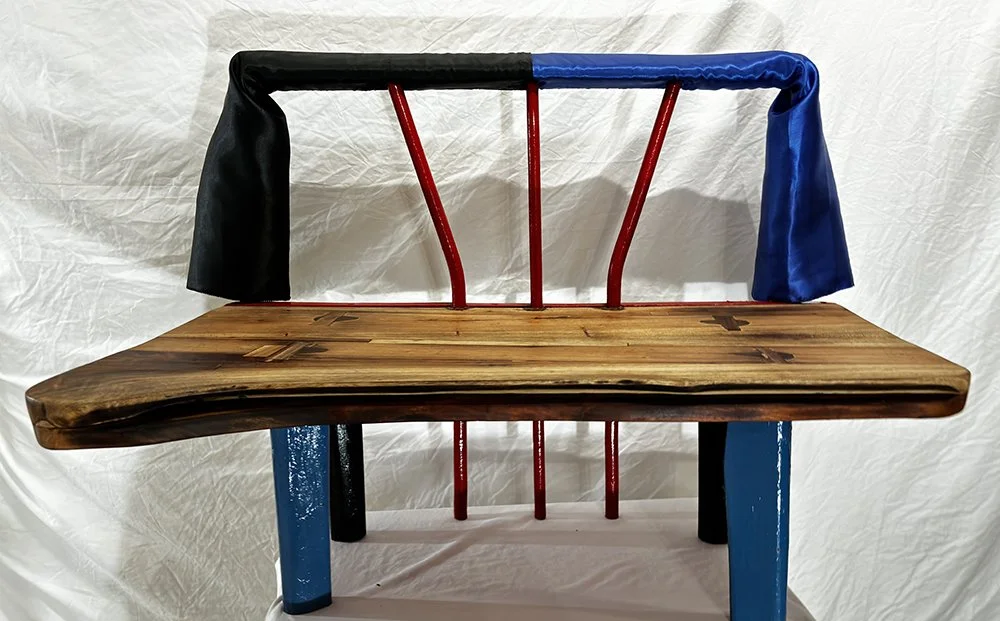
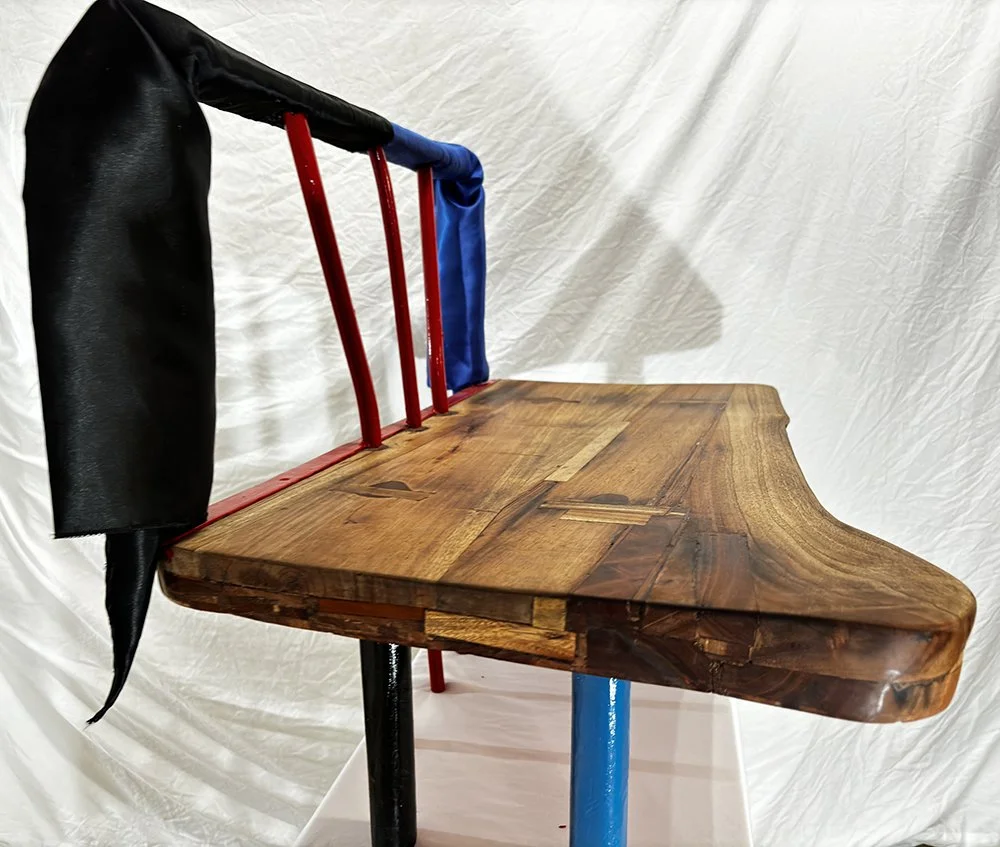
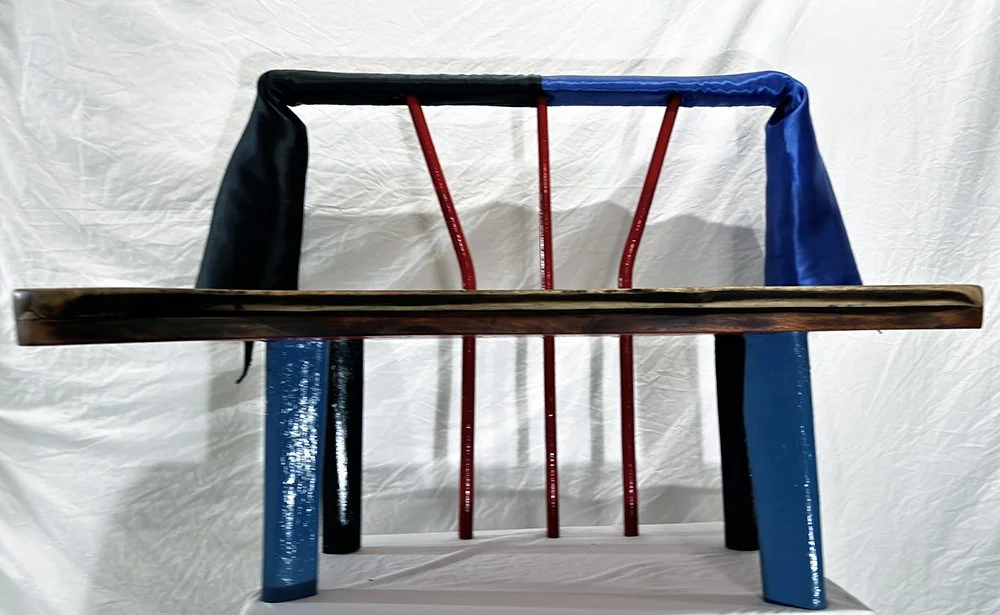
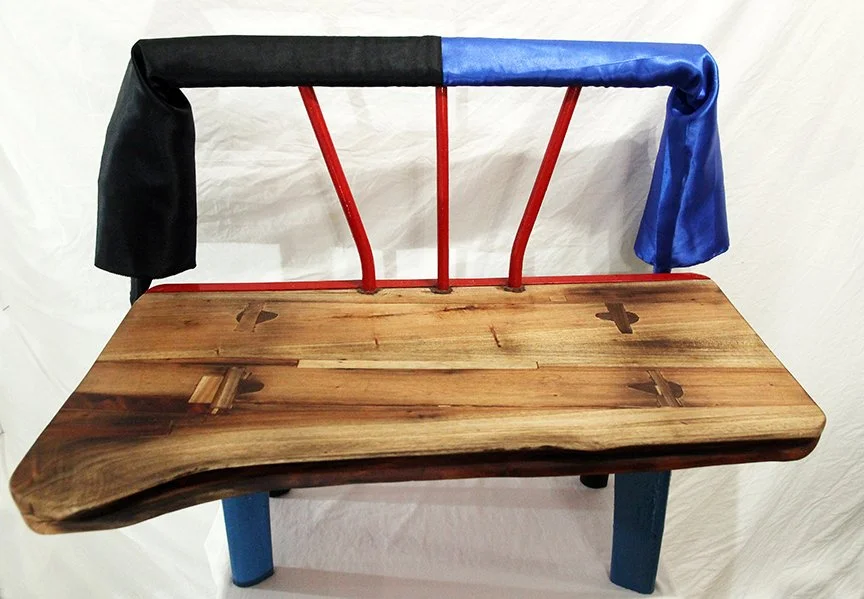
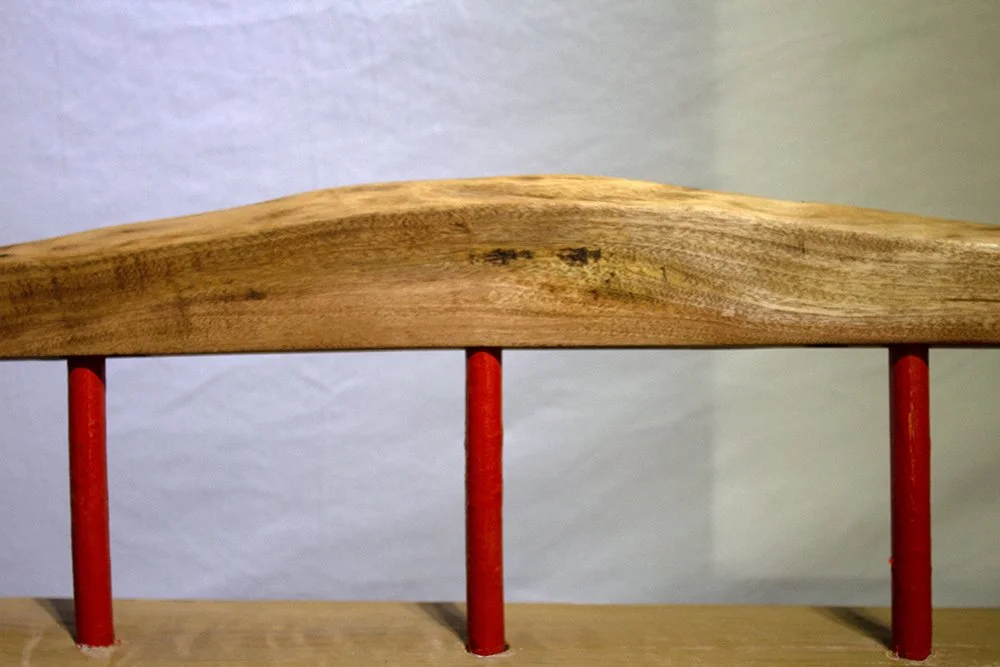
Ti-Chèz Ba (low chair) series aiming at inviting people to seat and listen to a story that may take some time to listen to or to tell a story.
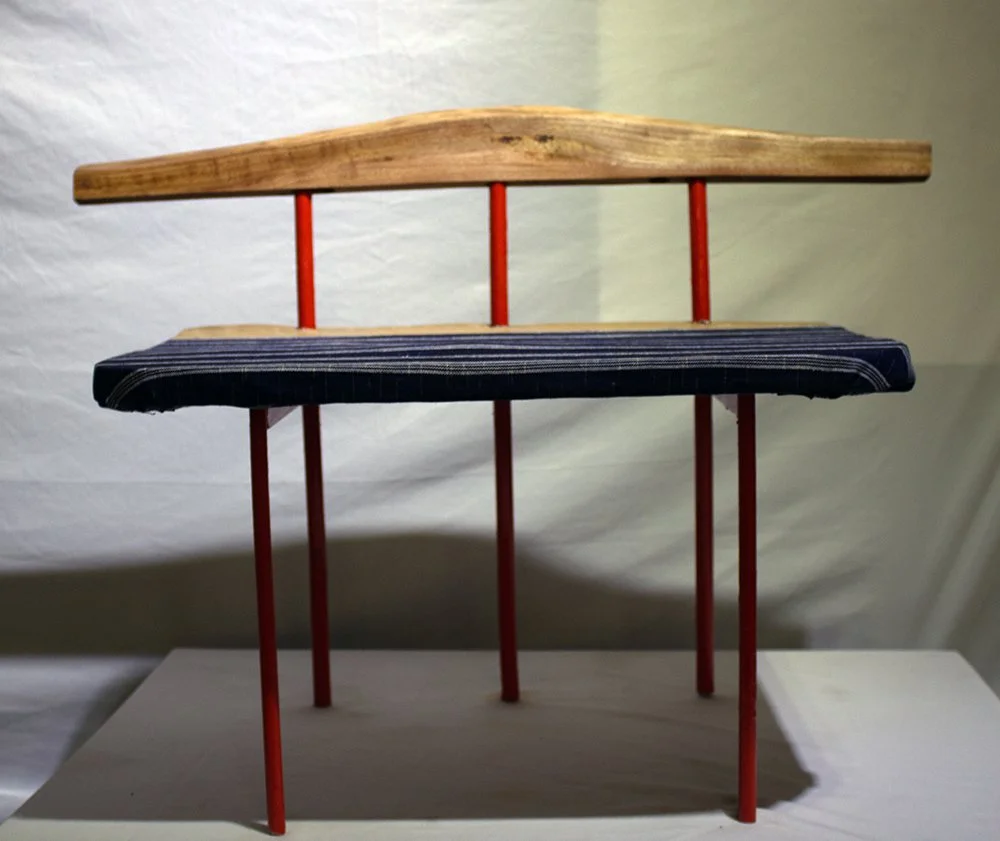
Haiti at the root of it is an African country with roots additional oral story telling traditions in the culture of the Tainos and the Arawaks who inhabited the island before the arrival of Columbus on December 5th, 1492. Those traditions have further developed through the spatial and cultural compositions of the lakou(s) (communal yard or compound or family village). These places are the places where women tell stories, where man play card games and dominos or drink coffee while telling and listening to stories. They are the places where ceremonial proceedings take place still using the low chair as a tool to consult the spiritual world on matters of ills, fortune and faith. Tectonically, this chair is made of discoveries or explorations in materials such as fallen royal palm thatch, batik fabric from Mali, cedar and reclaimed rebar from demolition site of damaged buildings during the 2010 earthquake that cause enormous damage to the built environment from Port-au-Prince to Jacmel.
the materials themselves weave a story of time and space. the story of the fallen royal palm thatch as a living matter then as material. The story of the rebar that was reclaimed from the construction site of the country’s oldest orthopedic surgery hospital dedicated to children with disabilities to the fabric that was transported and gifted.
Ti-Chèz Ba
Reiden Chair
Tectonically, this chair is made of discoveries or explorations in materials such as fallen royal palm thatch, batik fabric from Mali, cedar and reclaimed rebar from demolition site of damaged buildings during the 2010 earthquake that cause enormous damage to the built environment from Port-au-Prince to Jacmel.
the materials themselves weave a story of time and space. the story of the fallen royal palm thatch as a living matter then as material. The story of the rebar that was reclaimed from the construction site of the country’s oldest orthopedic surgery hospital dedicated to children with disabilities to the fabric that was transported and gifted.
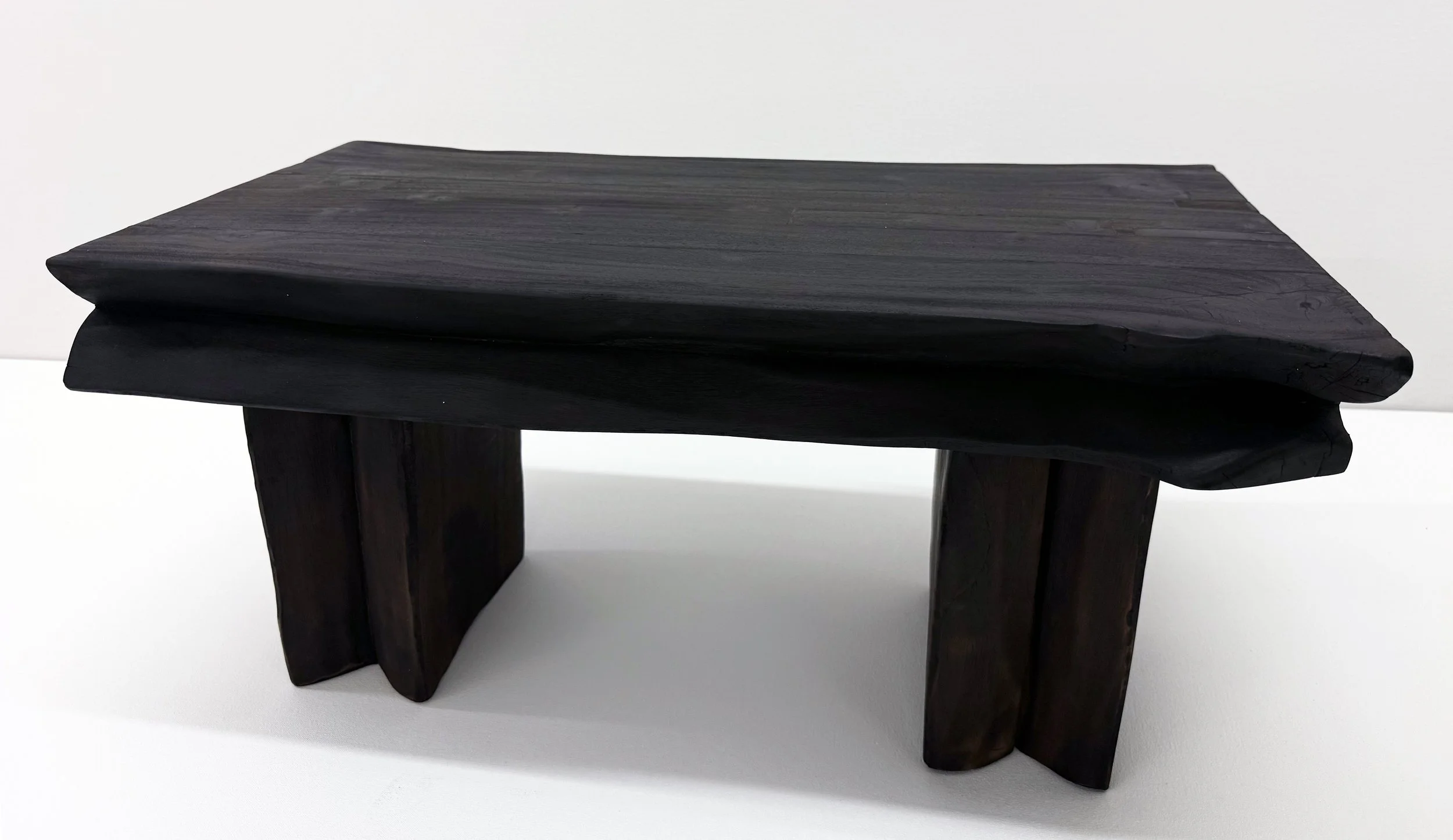
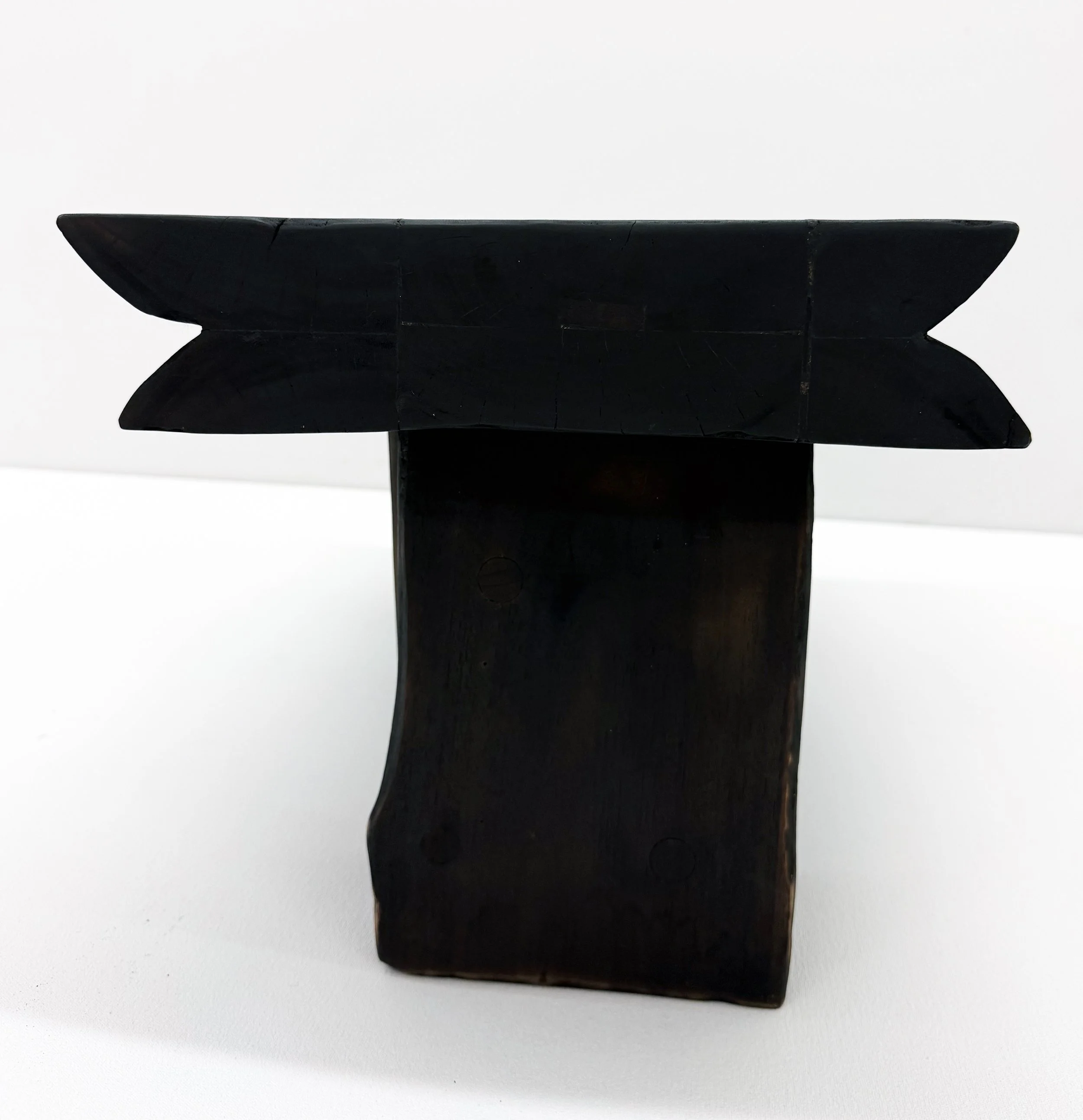
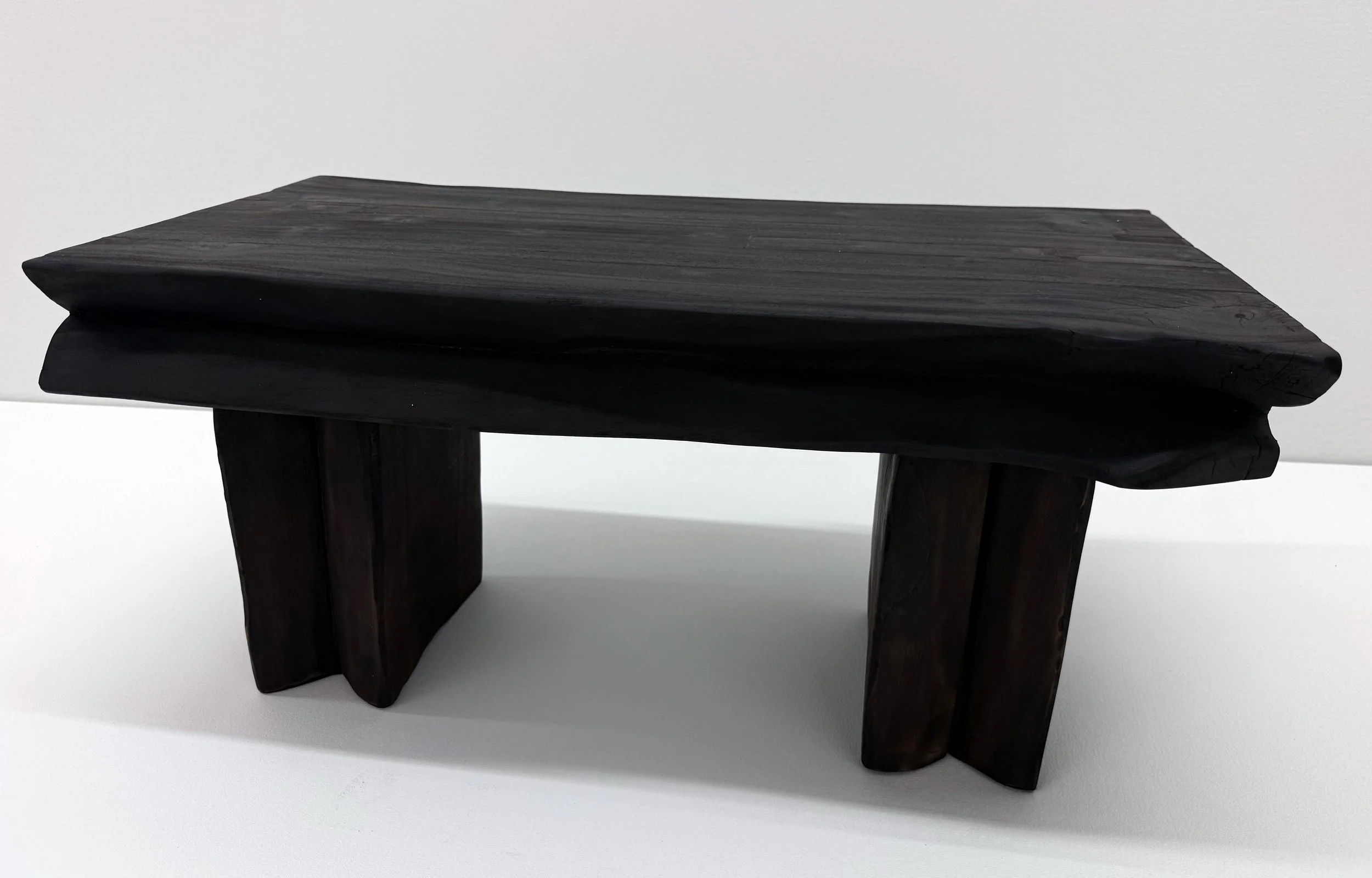
K-Bench continues the Ti Chèz Ba series. it is made of inverted slabs of cedar then charred and oil rubbed to achieved blackened finish. What does it mean to be black, curvy and polished?
Le Drapeau qui Aurait du Être stems from the quote from Jean Jacques Dessalines on 20th of May 1805 when he introduced Haiti’s 1805 constitution by proclaiming a black and red flag as the flag that should have been in lieu of the 18 May 1803 flag that was adopted in the final year of the battle for independence from France. The 1805 constitution cemented the acquisitions of the Haitian independence and set up the universal ideals of this independence regarding liberty and humanity.
This chair tells that story not as “The Should Have Been Flag” that Dessalines evoked, but rather as the flag that should be our future identity. The history of our banner is fraught with changes and contestation even before the proclamation of 1805. After Dessalines’ death Henri Christophe in the northern kingdom continued the black and red flag while Alexandre Petion the southern republic reintroduced the blue and red flag.
The chair low in height in the tradition of story listening and storytelling establishes the colors that should have been as Black Blue and Red; a way of establishing a ground of being that reconciles the ideals of the Jean Jacques Dessalines with the aspirations of the May 18, 1803, conference. These colors are also associated with Erzulie Dantor the fierce protective mother shown as the black Madonna in Vodou and fitting with her presence as the officiating spirit during the August 14th, 1791, launch of the Haitian revolution at Bwa Kayiman.